
IPL vs. Ultra Laser MD: Which Skin Rejuvenation Treatment Is Right for You?
When it comes to achieving brighter, smoother, more even-toned skin, not all laser and light treatments work the same way. Two popular options for addressing sun damage, pigmentation, and overall skin rejuvenation are IPL Photofacial and Ultra Laser MD.
At EverGlow Aesthetics in Tustin, CA, we offer both treatments to help patients address different skin concerns, from stubborn sun spots and facial redness to uneven texture, fine lines, and dullness.
But which treatment is right for you?
The answer depends on your skin concerns, skin type, and desired results.
What Is the Difference Between IPL and Ultra Laser MD?
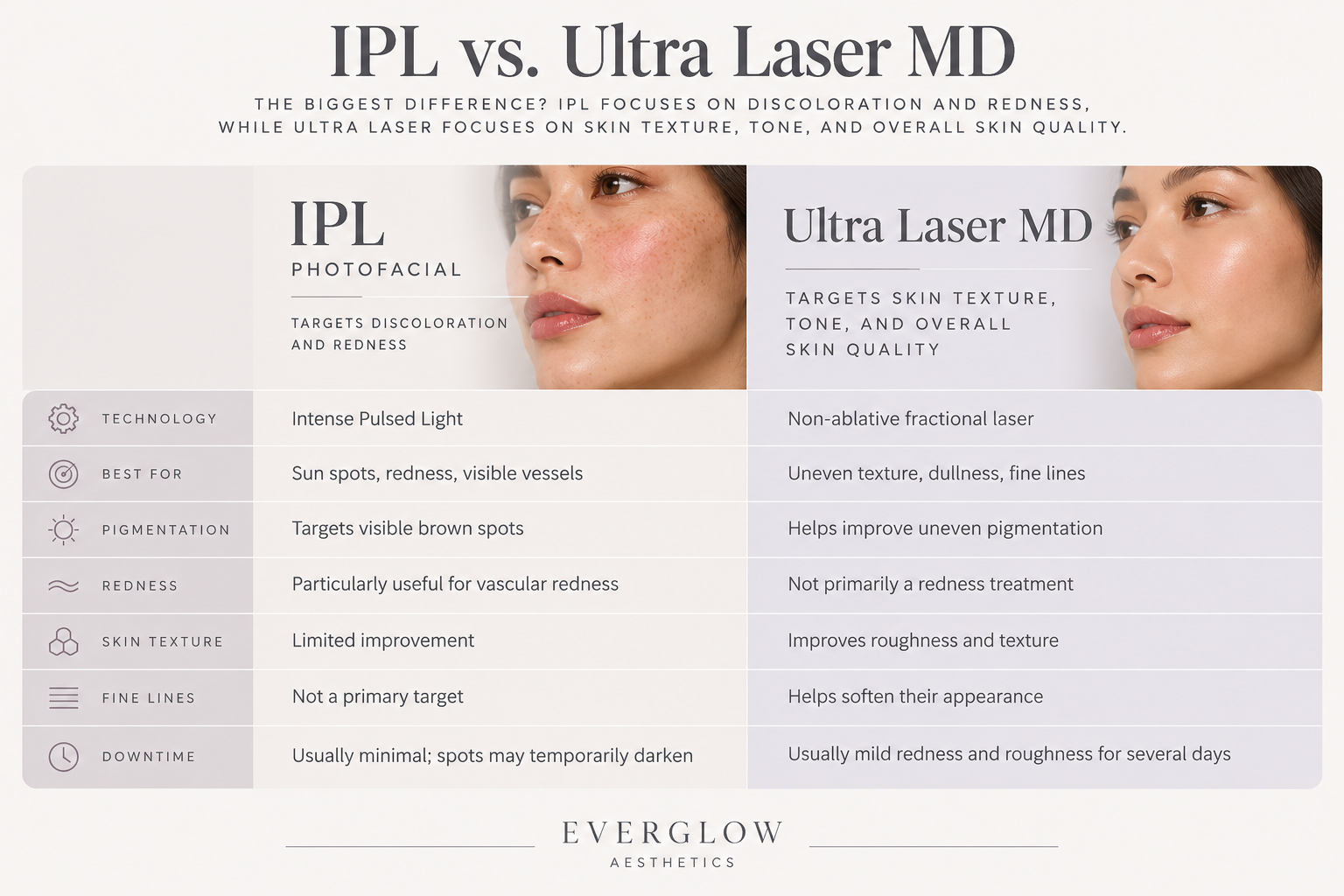
Although both treatments can improve the appearance of sun damage and uneven pigmentation, they use different technologies and target different concerns.
IPL Photofacial uses intense pulsed light to target visible pigmentation and redness, making it a popular choice for sun spots, freckles, and certain vascular concerns.
Ultra Laser MD, also known as LaseMD Ultra, uses non-ablative fractional laser technology to improve overall skin quality, including texture, tone, fine lines, and uneven pigmentation.
The biggest difference? IPL primarily focuses on discoloration and redness, while Ultra Laser focuses on skin texture, tone, and overall skin quality.
Both treatments can be customized based on your skin's needs.
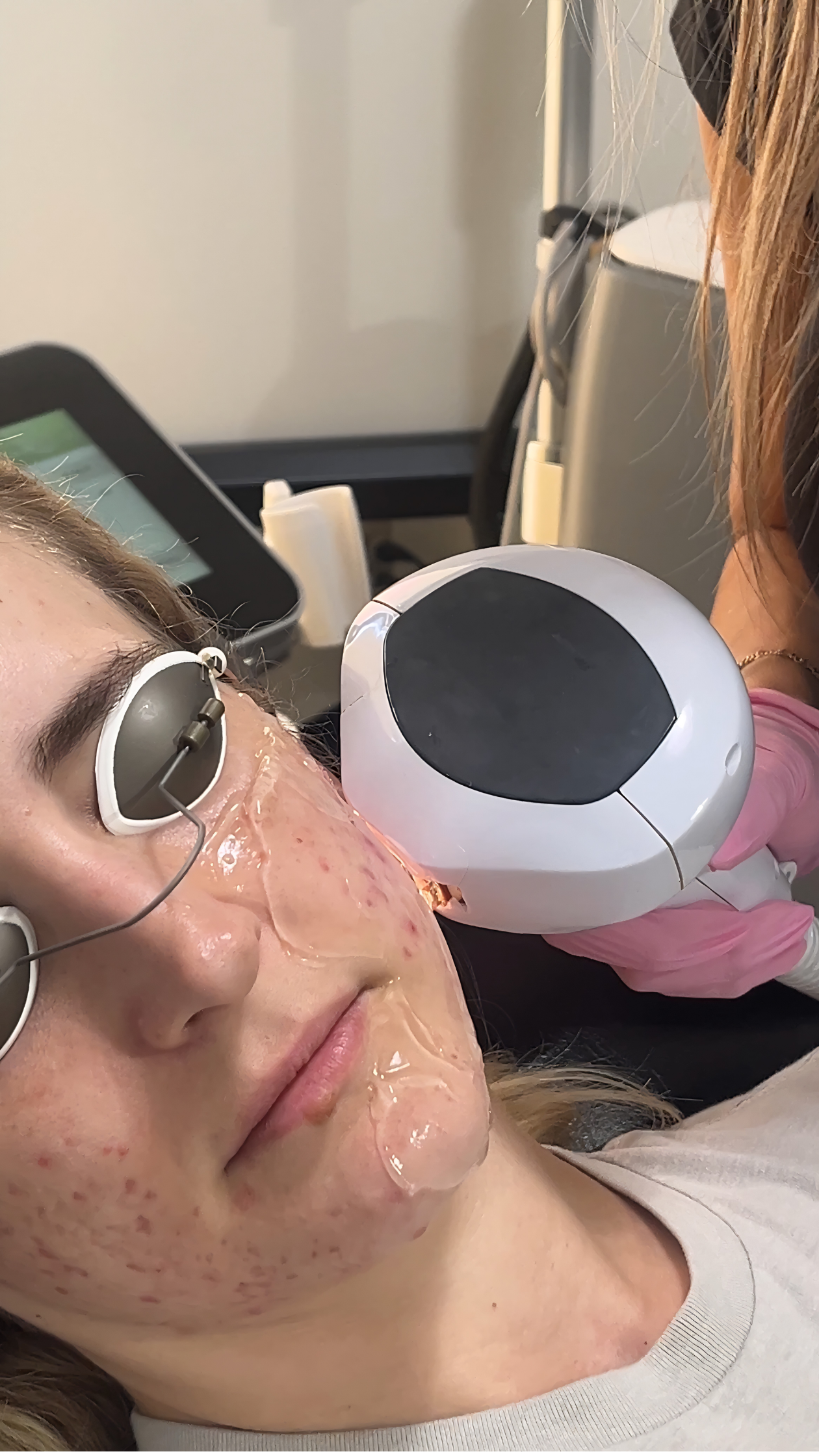
What Is IPL Photofacial Best For?
IPL, or Intense Pulsed Light, is a non-invasive light-based treatment designed to improve visible discoloration and redness.
Unlike a traditional laser, IPL delivers multiple wavelengths of light that are absorbed by targeted pigment and blood vessels in the skin.
IPL Can Help Improve:
Sun spots and visible sun damage
Brown spots and freckles
Uneven pigmentation
Facial redness
Certain visible blood vessels
Overall skin tone and clarity
IPL is especially popular among patients looking to address discoloration caused by years of sun exposure.
Following treatment, pigmented spots may temporarily darken before gradually fading as the skin renews itself.
Who Is a Good Candidate for IPL?
IPL may be a good option if your primary concerns are brown spots, sun damage, or facial redness.
However, IPL is not appropriate for every skin tone or pigmentation condition. Patients with darker skin tones, recent tanning, or melasma may require alternative treatment options due to the risk of unwanted pigment changes.
A consultation helps determine whether IPL is suitable for your skin.
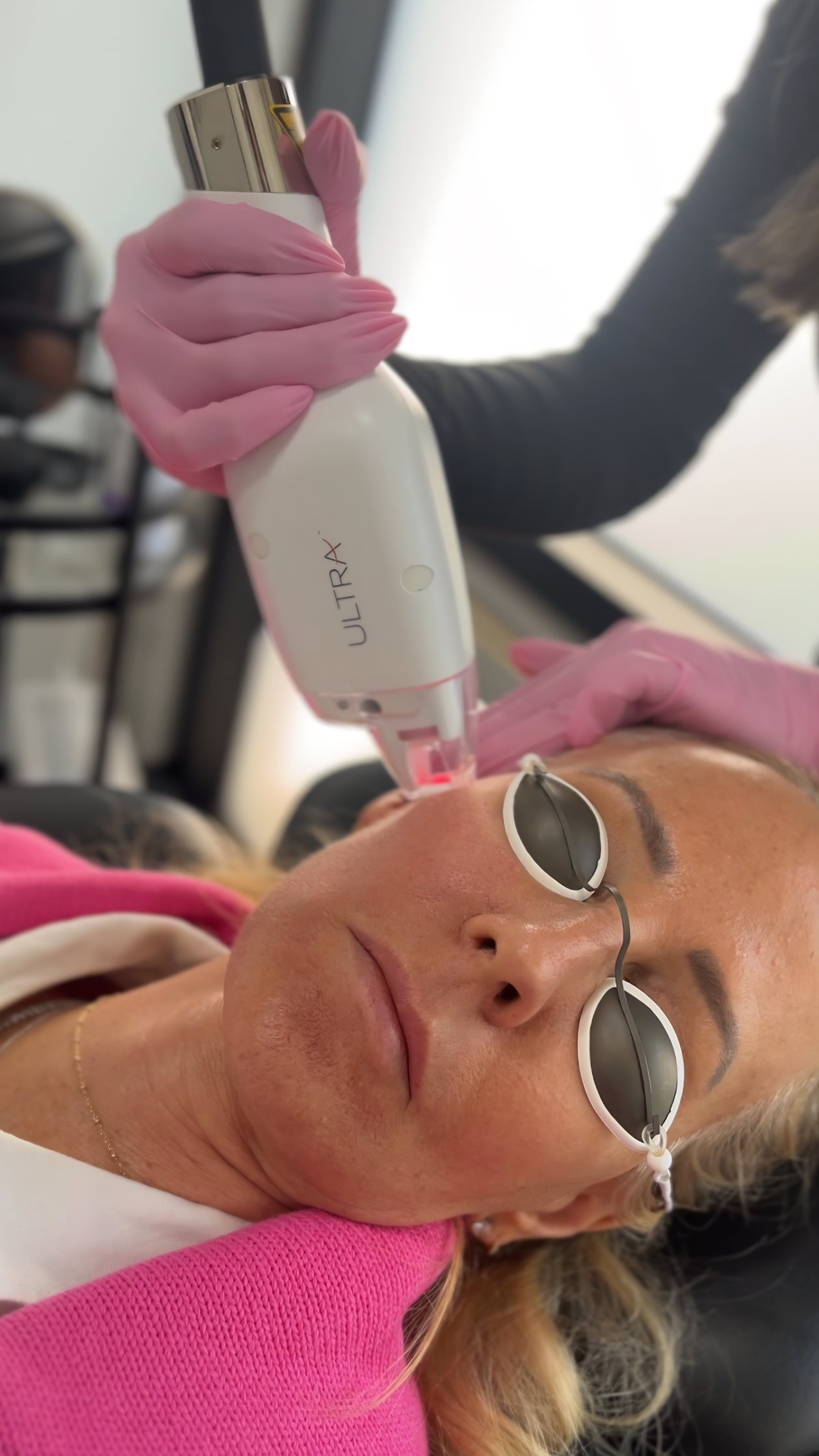
What Is Ultra Laser MD Best For?
Ultra Laser MD, also known as LaseMD Ultra or Ultra LaseMD, is an advanced non-ablative fractional laser treatment designed to improve overall skin quality.
Unlike IPL, which primarily targets visible pigmentation and redness, Ultra Laser creates controlled microscopic treatment zones in the skin to encourage renewal and collagen remodeling.
This makes it a versatile option for patients who want to address multiple skin concerns in one treatment.
Ultra Laser MD Can Help Improve:
Uneven skin texture
Dull or rough skin
Fine lines
Sun damage and brown spots
Uneven pigmentation
Uneven skin tone
Overall skin radiance and quality
Ultra Laser is particularly appealing for patients looking for a more comprehensive skin refresh rather than targeting one specific concern.
Who Is a Good Candidate for Ultra Laser?
Ultra Laser MD may be a good option for patients experiencing dullness, uneven texture, fine lines, or pigmentation concerns.
Depending on treatment settings and individual skin characteristics, Ultra may be suitable for a wider range of skin tones than some IPL treatments.
Your provider will evaluate your skin and determine the most appropriate treatment approach.
IPL vs. Ultra Laser for Sun Damage: Which Is Better?
Both IPL and Ultra Laser MD can improve the appearance of sun-damaged skin, but the best option depends on how that damage appears.
If your main concern is visible brown spots or redness: IPL may be the more targeted treatment.
If your main concern is uneven pigmentation combined with rough texture, dullness, or fine lines: Ultra Laser MD may provide more comprehensive improvement.
For example, someone with scattered sun spots and facial redness may benefit from IPL, while someone with dull skin, uneven texture, and sun damage may prefer Ultra Laser.
Neither treatment is universally better. Each addresses different aspects of skin rejuvenation.
Can You Combine IPL and Ultra Laser MD?
Yes! IPL and Ultra Laser MD can complement each other when performed as part of a customized treatment plan.
Because they work through different mechanisms, combining these technologies may help address multiple concerns, including:
Brown spots and uneven pigmentation
Facial redness
Rough or uneven skin texture
Fine lines
Dullness and overall skin quality
IPL targets visible discoloration and vascular concerns, while Ultra Laser supports skin renewal and improves texture and tone.
Your provider will determine whether these treatments should be performed together or spaced apart based on your skin type, sensitivity, and treatment goals.
How Much Downtime Should You Expect?
Both IPL and Ultra Laser MD are generally considered minimally invasive treatments, although recovery varies depending on treatment intensity and individual skin response.
IPL Photofacial Downtime
After IPL, patients may experience temporary redness, warmth, or mild swelling. Brown spots may darken before gradually fading over the following days.
Most patients can return to their normal daily activities relatively quickly.
Ultra Laser MD Downtime
Following Ultra Laser, patients may experience redness, warmth, mild swelling, and a sandpaper-like texture as the skin renews itself.
These effects typically improve over several days, depending on treatment settings.
For both treatments, proper sun protection and following your provider's aftercare instructions are essential.
How Many IPL or Ultra Laser Treatments Will I Need?
The number of sessions depends on your skin concerns, treatment goals, and individual response.
Some patients notice visible improvement after one session, while others benefit from a series of treatments for more significant or longer-lasting results.
Factors that influence your treatment plan include:
Severity of pigmentation or sun damage
Skin type and sensitivity
Desired level of improvement
Previous aesthetic treatments
Long-term maintenance goals
At EverGlow Aesthetics, we customize treatment recommendations rather than taking a one-size-fits-all approach.
Frequently Asked Questions About IPL vs. Ultra Laser
Is IPL or Ultra Laser better for brown spots?
Both treatments can improve brown spots and sun damage. IPL is often preferred for targeting distinct areas of visible pigmentation, while Ultra Laser MD may be beneficial when pigmentation is accompanied by uneven texture, dullness, or fine lines.
Is Ultra Laser MD better than IPL for fine lines?
Ultra Laser MD is generally the more appropriate choice for fine lines because its fractional laser technology promotes skin renewal and collagen remodeling. IPL is primarily used to address pigmentation and redness.
Can IPL and Ultra Laser help with acne scars?
Ultra Laser MD may improve certain superficial textural irregularities, but deeper or more significant acne scarring often requires other treatments. IPL is not typically used to treat depressed acne scars, although it may help with some residual redness or discoloration.
Are IPL and Ultra Laser the same as laser resurfacing?
Ultra Laser MD is a non-ablative fractional laser treatment that provides skin resurfacing benefits without removing the entire outer layer of skin.
IPL is technically a light-based treatment rather than a laser. It primarily targets pigmentation and vascular concerns.
Which treatment is better for overall skin rejuvenation?
If your main goal is improving texture, tone, fine lines, and overall skin quality, Ultra Laser MD may be the better option.
If your primary concerns are brown spots and redness, IPL may be more suitable.
Some patients benefit from combining both treatments as part of a personalized skin rejuvenation plan.
Discover IPL and Ultra Laser Treatments in Tustin, Orange County
Choosing between IPL and Ultra Laser MD doesn't have to be complicated. The right treatment depends on your skin's unique needs and what you're hoping to improve.
At EverGlow Aesthetics in Tustin, CA, we offer personalized skin rejuvenation treatments for patients throughout Orange County, including Irvine, Santa Ana, Orange, Newport Beach, and surrounding communities.
Whether you're looking to address sun damage, improve uneven pigmentation, soften fine lines, or refresh your overall complexion, our team can help you explore the options best suited to your skin.
Ready to discover which treatment is right for you?
Book a consultation at EverGlow Aesthetics and let us create a customized treatment plan for your skin goals.